



Driving with sciatica starts with three adjustments before you turn the key: positioning hips above knees, adding lumbar support, and emptying your back pockets.
During the drive, stop at least once per hour and use cruise control to reposition your legs. This guide covers all seven steps, with product picks and local commute tips.
Up to 40% of people experience sciatica in their lifetime because the lumbar discs that protect spinal nerves lose hydration with age, and modern sedentary lifestyles accelerate that wear[4]. The good news: 80 to 90% improve without surgery because the body reabsorbs herniated disc material over weeks to months, and inflammation gradually subsides as the nerve root adapts[8].
If you commute on I-95, you know what 30-plus minutes of stop-and-go does to an irritated sciatic nerve. The adjustments below can make that drive manageable.
Quick summary:
- Position hips higher than knees using a wedge cushion or folded towel
- Add a lumbar roll to maintain your lower back's natural curve
- Remove your wallet and phone from back pockets before sitting
- Stop every 45 to 60 minutes to walk and stretch
- Use cruise control on I-95 or the Turnpike to free your right leg
This article contains affiliate links. If you purchase through these links, we may earn a small commission at no extra cost to you. We only recommend products we believe genuinely help. See our disclosure policy for details.
Why Driving Makes Sciatica Worse
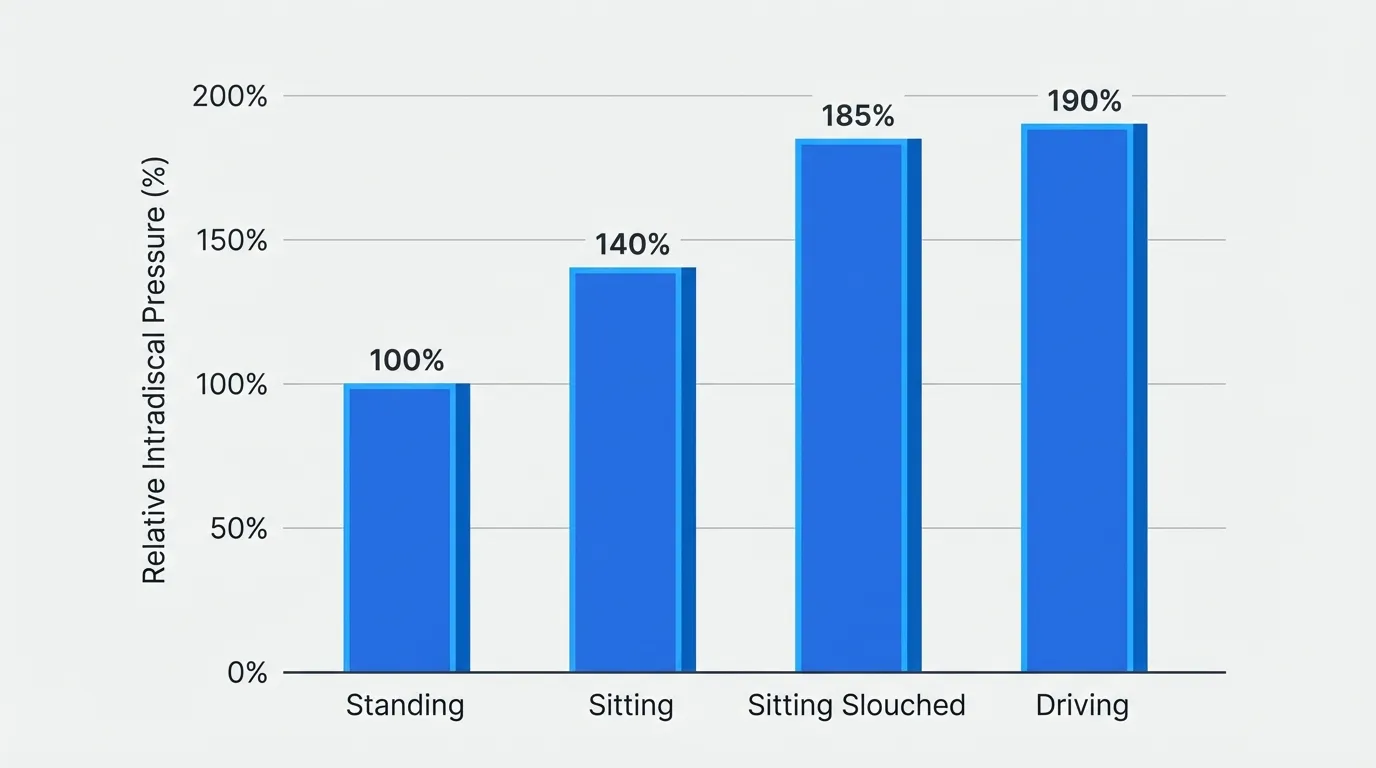
Prolonged sitting in a car seat increases intradiscal pressure and compresses the sciatic nerve against the piriformis muscle. Driving combines three factors that aggravate the nerve: sustained hip flexion, road vibration, and a fixed right-leg position on the gas pedal.
When you sit in a car, your hips flex below 90 degrees, pushing the posterior wall of your spinal discs toward the nerve root[1].
Add whole-body vibration from the road, and the risk of low back pain climbs higher. A systematic review identified occupational driving as an independent risk factor because the combination of sustained spinal loading and whole-body vibration accelerates disc fatigue beyond what either produces alone[5].
Then there is your right leg. Holding it at a fixed angle on the gas pedal for 30-plus minutes creates asymmetric tension through the piriformis and hamstring. Miami's stop-and-go traffic on I-95 and the Palmetto Expressway can turn even a short commute into prolonged seated compression.
Remove your wallet and empty your back pockets
Empty your back pockets completely. Sitting on a wallet tilts the pelvis and compresses the sciatic nerve on the elevated side. Before you sit down, take your wallet, phone, and keys out of your back pockets. Even a thin wallet shifts the nerve against the piriformis on one side.
This takes five seconds and costs nothing. Truckers who sit eight to eleven hours a day call it the single easiest fix. Drop everything in the center console or door pocket before you pull out of the driveway.
If you wear cargo pants or shorts with side pockets, check those too. Anything that creates an uneven surface between your body and the seat can shift pelvic alignment and increase nerve irritation during the drive.
Set up your seat before you start driving
Position hips higher than knees. This reduces lumbar flexion and decreases pressure on the sciatic nerve root. Push the seat back until your knee bends at roughly 120 degrees with your foot on the brake. Recline the seatback to 100 to 110 degrees, just past vertical.
Dial in three settings before turning the ignition:
- Seat distance: Foot on brake, knee at approximately 120 degrees.
- Seatback angle: Tilt to 100 to 110 degrees so shoulder blades rest against the seat.
- Seat tilt or height: Tilt the front of the seat pan down so hips sit higher than knees.
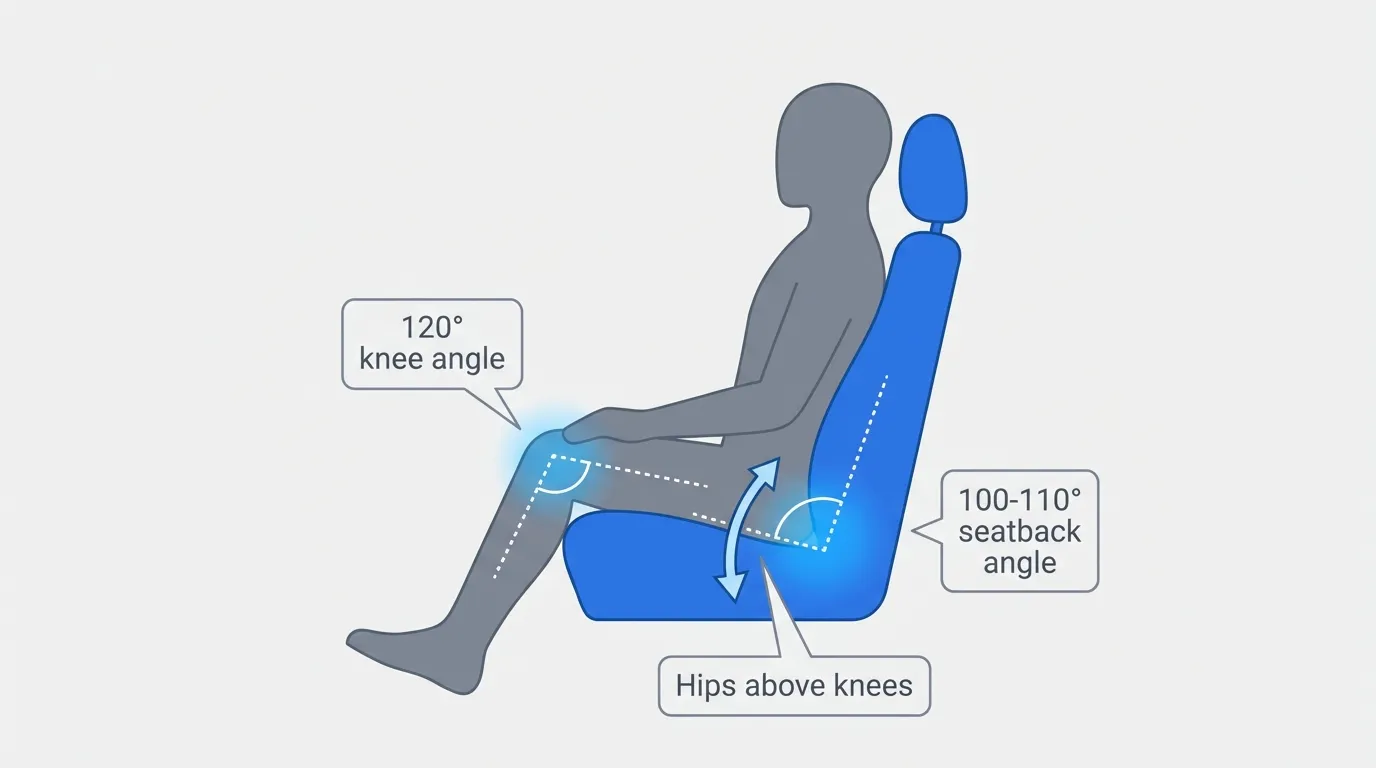
When hips drop below knee level in bucket seats, the lumbar spine flattens and intradiscal pressure rises because the posterior annulus bears more load once the natural lordotic curve flattens[1][2].
Elevating your hips reverses this chain. If your seat does not tilt enough, a cushion bridges the gap.
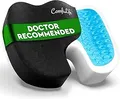
ComfiLife Gel Enhanced Seat Cushion
Has a U-shaped coccyx cutout that relieves tailbone and piriformis compression, and the gel layer stays cooler than pure memory foam. At 2.5 inches thick, it raises your seating position, so readjust mirrors after placing it.
One caveat: The non-slip bottom works best on cloth seats. On leather, it can shift during sharp turns.
In South Florida, bring cushions inside rather than leaving them on a sun-baked seat.
Add lumbar support to preserve your lower back curve
Fill the gap in your lower back. Place a lumbar roll or rolled-up bath towel in the curve of your lower back, between your spine and the seatback. It should fill the gap without pushing you forward. A lumbar roll maintains the spine's lordotic curve and reduces posterior disc bulging toward the sciatic nerve.
If your car has built-in lumbar adjustment, increase it until you feel gentle support in the hollow of your lower back.
If not, a rolled bath towel at belt level works as a free starting point. Car seats flatten the lumbar curve over time, and the posterior disc wall bulges toward the nerve root once that arch disappears because the compressive load shifts from the vertebral bodies to the thinner posterior wall of the disc.
For a dedicated option:
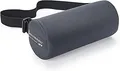
OPTP McKenzie Original Lumbar Roll
Designed by physiotherapist Robin McKenzie. The elastic strap attaches to the headrest post, keeping it in place on the highway. The firm foam holds its shape longer than rolled towels, which flatten after a few drives.
One caveat: It takes one to two weeks before it feels natural.
Adjust your steering wheel and mirrors to prevent slouching
Bring the wheel to you, not you to it. Bring the wheel closer and tilt it toward you so your elbows bend at roughly 90 degrees without leaning forward. Then set your rearview mirror while sitting tall.
Set your mirrors from your ideal upright posture. If you later notice you cannot see clearly, that is your signal that you have slouched. Hunching forward rounds the lumbar spine and increases disc pressure, undoing the work you completed with your seat and lumbar roll.
This mirror trick is one of the simplest ways to know how to drive with sciatica using good form, because it gives you real-time feedback without any equipment.
Use cruise control to free your right leg
Engage cruise control on highways. Cruise control frees the right leg from the gas pedal, breaking the static hip position that aggravates sciatic nerve tension on the driving side. Once engaged, you can move your right foot off the pedal entirely and reposition both legs.
Once engaged, rest both feet flat on the floor and shift your weight between hips every few minutes. Bend and straighten each knee five to ten times. If your car has adaptive cruise control, use it even in moderate traffic to reduce how long your right foot stays locked on the pedal. This is especially useful on I-95, the Florida Turnpike, and I-75 where Greater Miami drivers log 45-plus minutes heading to Fort Lauderdale, Naples, or Orlando.
Take a break every 45 to 60 minutes to walk and stretch
Set a 45-minute timer. When it goes off, pull over and walk for at least five minutes, then do two stretches. Stopping at regular intervals reverses the spinal flexion and nerve compression that accumulate during seated driving.
At each stop:
- Standing back extension: Place hands on your lower back and gently arch backward. Repeat five to ten times, holding two to three seconds at end range.
- Standing hamstring stretch: Place one foot on a raised surface like a car bumper. Lean forward gently until you feel a stretch in the back of the thigh. Hold 30 seconds per side[3].
- Walk: Walk around the rest stop for three to five minutes.
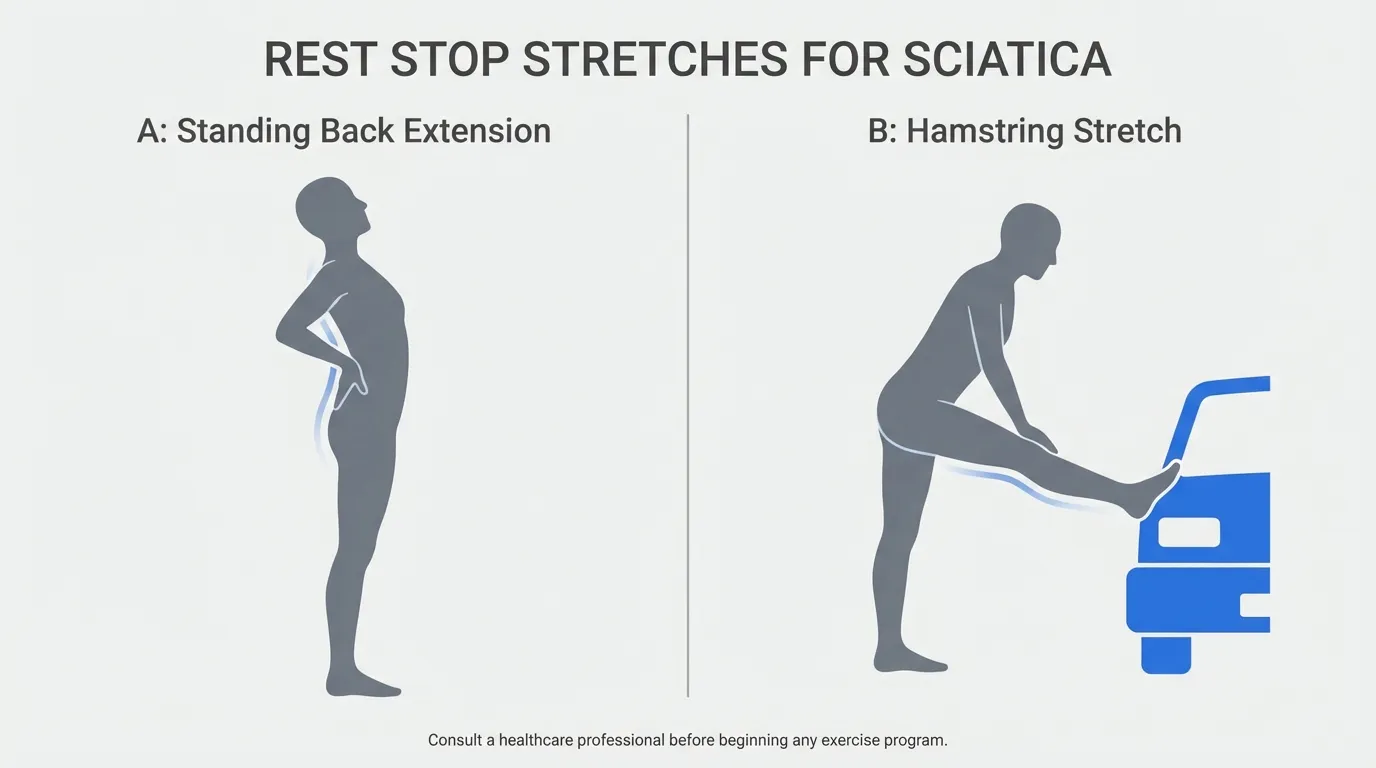
For Miami-to-Key West drives, plan at least three stops. The first natural break is around Florida City, about 45 minutes south of downtown.
If your car has built-in heated seats, use them on a low setting for the first 10 to 15 minutes after getting back on the highway. The warmth loosens tight muscles around the sciatic nerve because heat increases local blood flow and reduces muscle spindle firing rate, allowing the muscle fibers to relax. If your car does not have heated seats, a plug-in option works the same way:
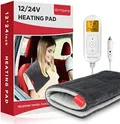
Comfytemp 12V Car Heating Pad
Plugs into your cigarette lighter and warms tight muscles during the first 10 to 15 minutes back on the road. Four heat settings with auto-off timers. Place it behind your lower back or on the seat.
One caveat: Heat is not recommended during acute inflammation.
Stretch and walk when you arrive
Walk before you sit again. Do not go directly from the car to a chair. Walk for 10 to 15 minutes after arriving, then repeat the stretches from Step 6. Walking after a drive restores blood flow to the sciatic nerve because the rhythmic muscle contractions activate the venous pump that flushes inflammation from compressed tissues.
If pain flared during the drive, apply an ice pack wrapped in a cloth for 15 to 20 minutes. After arriving at work near Brickell, Coral Gables, or Downtown, take a 10-minute walk around the block before heading to your desk.
Wondering how long your sciatica will take to improve? Our recovery timeline guide breaks it down by causeFor days when a flare-up is unavoidable:

Salonpas Lidocaine 4% Pain Relieving Gel-Patches
Apply over the lower back or buttock 30 minutes before driving for up to eight hours of relief without drowsiness.
One caveat: Patches address symptoms only. South Florida humidity can cause them to peel faster, so apply in an air-conditioned environment.
When to See a Professional About Your Sciatica
Persistent sciatica that does not respond to self-care may need professional evaluation. If these driving adjustments do not reduce your pain after two to three weeks, or if symptoms are getting worse, it is time for professional help.
For most people, sciatica responds well to movement, stretching, and the positioning strategies in this guide. TheraMax on Coral Way offers robotic muscular therapy that targets the deep muscle tension patterns contributing to sciatic nerve compression. TheraMax is one option worth exploring alongside the self-care strategies above.
If your symptoms do not match typical sciatica, they may point to piriformis syndrome or a disc issueFrequently Asked Questions About Driving with Sciatica
These questions cover scenarios the steps above do not address directly, including emergency responses, side-specific symptoms, congestion strategies, and seated exercises for Greater Miami commuters.
1 What should I do if my foot goes numb while driving?
Once stopped, stand and walk for five minutes, then perform a standing hamstring stretch. If numbness does not resolve within 15 minutes, avoid driving further that day and schedule a professional evaluation.[6]
2 Does it matter if my sciatica is on my left side or right side?
3 How do I manage sciatica in stop-and-go traffic?
When traffic stalls, flex and point your toes 10 times to keep blood circulating. These micro-movements prevent compression from building as quickly as it does in a fully static position.
4 Can I do any exercises while sitting in the car?
Repeat five times per leg. Ankle pumps, alternating between pointing and flexing toes for 30 seconds, also promote circulation. For commuters dealing with daily congestion on US-1 or SW 8th Street, these small movements add up over a 30-minute drive.
5 Is driving a manual (stick shift) worse for sciatica?
References
- New in vivo measurements of pressures in the intervertebral disc in daily life. Spine. 1999 ;24 (8) :755-762 . PubMed
- Interface pressure and the prediction of car seat discomfort. Applied Ergonomics. 1999 ;30 (2) :99-107 . PubMed
- 3 Pointers for Traveling With Sciatica. Spine-health.com (Veritas Health). 2024 . Source
- Sciatica: Of all the nerve. Harvard Health Publishing. 2023 . Source
- Association between sitting and occupational LBP. European Spine Journal. 2007 ;16 (2) :283-298 . PubMed
- Low Back Pain Fact Sheet. National Institutes of Health (NIH). 2024 . Source
- Low back pain and sciatica in over 16s: assessment and management (NG59). NICE Guidelines. 2020 . Source
- Sciatica: Causes and Treatment. OrthoInfo. 2024 . Source
Disclosure: This article contains affiliate links. We may earn a small commission if you purchase through these links, at no extra cost to you. Full disclosure.