



This guide covers everything Miami residents need to know about heel spurs, from what actually causes the pain to how each treatment option works and how long recovery takes.
What Is a Heel Spur?
A heel spur is a bony calcium deposit that forms on the underside of the heel bone where the plantar fascia attaches to the calcaneus, developing gradually over months as the body deposits calcium in response to chronic mechanical stress.
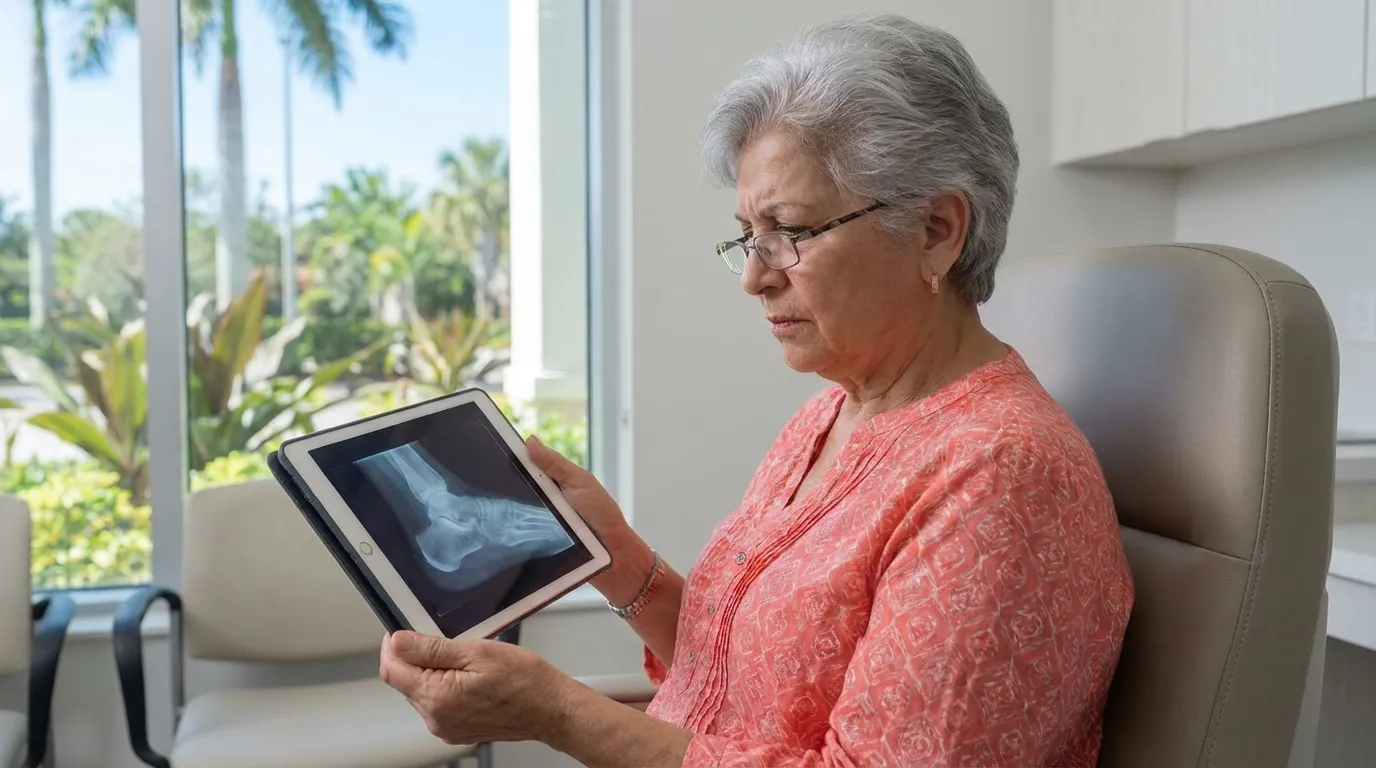
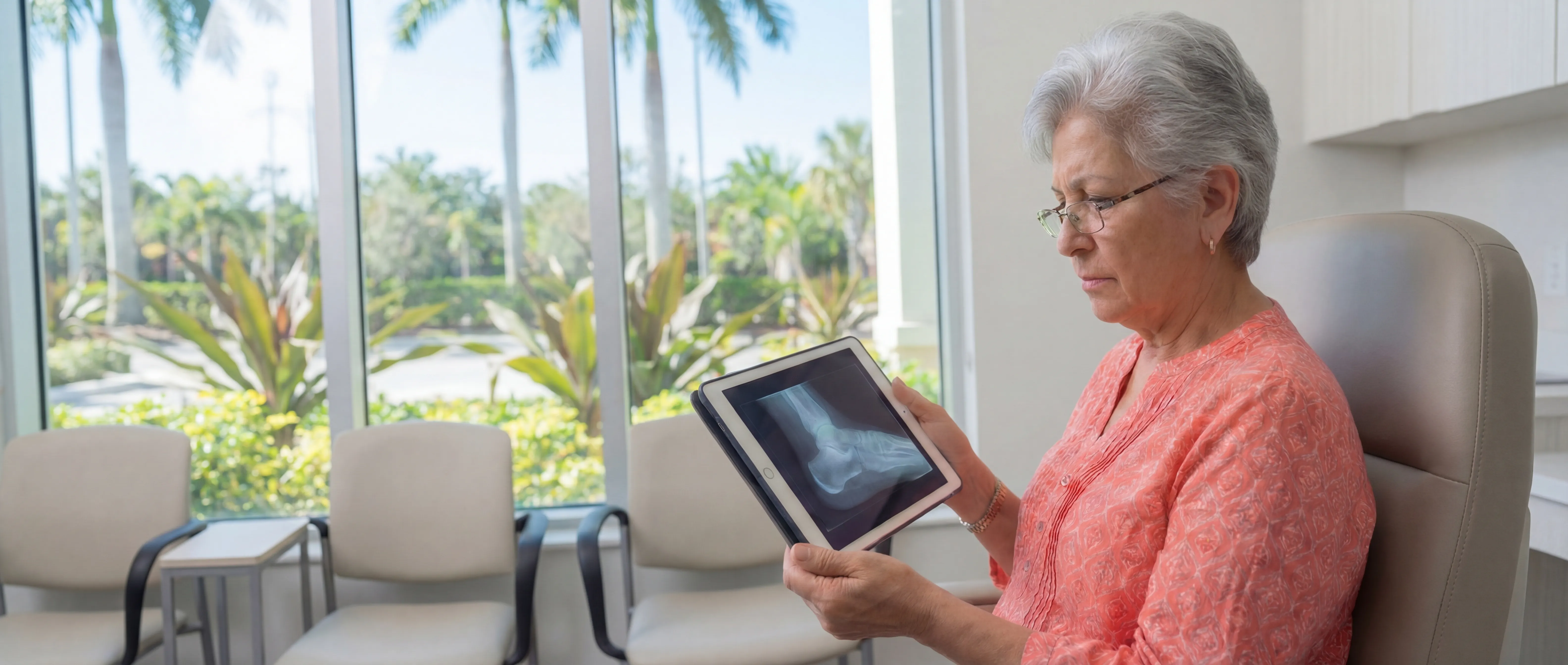
These growths create a pointed or shelf-like protrusion that can reach up to half an inch, visible on a standard X-ray. Once formed, heel spurs are permanent. Surgery is the only way to remove the calcium deposit.[1]
Here is the part that surprises most people: heel spurs appear in 10 to 63% of individuals who have no heel pain at all, with the wide range reflecting differences in study populations, imaging criteria, and age groups examined.[2] About 15% of the general population has one.[1] Many people walk around with spurs and never know it.
In Miami, where foot X-rays are common among active adults, spurs frequently show up in people who came in for completely unrelated complaints. The spur is there, but it is not what hurts.
That distinction matters because it changes how you think about treatment. If the calcium deposit is not generating the pain, removing or targeting the bone is not necessarily the answer. The pain typically comes from soft tissue restriction around the spur, which means releasing that restriction may resolve the pain even though the spur remains.
Heel Spur Symptoms: How to Know If You Have One
Heel spur symptoms center on sharp pain at the bottom of the heel with your first steps in the morning, along with tenderness when pressing the heel directly and discomfort that worsens after prolonged activity rather than during it.
These symptoms overlap significantly with plantar fasciitis, which is why many people in Miami visit a podiatrist thinking they have one condition and learn they have both. After walking for a few minutes, the pain often decreases as the fascia warms up and loosens. It returns after long periods of sitting or standing still.
Other common symptoms include:
- Tenderness on the bottom of the heel when pressing directly on the area
- Pain that worsens after activity, not during it
- A dull ache in the heel throughout the day, especially after being on your feet
- Stiffness in the heel and arch area, particularly after rest
If your heel pain rates below a 4 out of 10 and improves within the first 10 minutes of walking, home care is often sufficient. Pain above a 6 that persists throughout the day or limits your ability to walk warrants professional evaluation to identify the specific tissue generating the discomfort. Left unaddressed, heel spur pain can progress to the point where those first morning steps become a daily struggle and standing for more than a few minutes feels unsustainable.
See a doctor if you experience numbness or tingling in your foot, severe swelling without a clear injury, pain in both heels simultaneously, or inability to bear weight on the affected foot. These symptoms may indicate a stress fracture, nerve compression, or systemic condition that requires medical evaluation.
Heel spurs are typically confirmed through X-ray imaging, though ultrasound can also assess fascia thickness. Since many spurs cause no pain, an imaging finding alone does not explain your symptoms. Your provider should also evaluate gait patterns, muscle tightness, and pain location to determine whether the spur, the fascial tissue, or another structure is the actual source.
The overlap between heel spurs and plantar fasciitis is significant. About 50% of people with plantar fasciitis also have a heel spur, but the conditions are distinct.[3] Spurs represent a structural change in bone. Plantar fasciitis is degeneration of the fascial tissue. They often coexist, but treating one does not automatically resolve the other.
What Causes Heel Spurs?
Heel spurs develop as the body's adaptive response to chronic mechanical stress on the heel bone, depositing calcium at the fascial attachment point to reinforce areas under sustained tension from repetitive loading, tight muscles, or altered gait.
Several factors contribute to spur formation, and each one operates through a specific chain of tissue-level changes:
Repetitive impact on hard surfaces. Running or walking on concrete and asphalt sends impact forces through the foot. The plantar fascia absorbs that shock at its heel attachment point. Over months of repetitive loading, the attachment site becomes chronically stressed, and the body deposits calcium to reinforce the area. Miami's flat terrain and year-round warm climate encourage walking and running on hard surfaces like sidewalks and asphalt paths around Biscayne Bay, which means more cumulative impact over time.
Tight calf muscles. Tight gastrocnemius and soleus muscles restrict ankle dorsiflexion. When the ankle cannot flex properly, each step transfers more load to the plantar fascia instead of being absorbed by the calf. That chronic pull at the calcaneal attachment triggers the calcification response.[4]
Anterior pelvic tilt and psoas tightness. This is the kinetic chain many practitioners miss when treating only the foot. A tight psoas pulls the pelvis into anterior tilt, altering gait mechanics and creating an abnormal heel strike pattern. That altered gait sends compensatory strain down the entire posterior chain, tightening the calves, overloading the fascia at the heel, and eventually producing a spur as an adaptive skeletal response.
Elevated body weight. Each pound of body weight generates roughly two to three times its force at the heel during walking.[5] When that chronic compression exceeds the plantar fascia's capacity to repair, the body reinforces the stressed area with bone growth.
Age (peak incidence 40-60). The plantar fascia loses elasticity as you age, reducing its capacity to absorb shock.[6] The result is greater stress at the calcaneal attachment and a higher rate of spur formation. No large plantar spurs were found in individuals under 40 in one major study.[7]
Heel Spur Home Care: What You Can Do Today
Start with calf and plantar fascia stretches twice daily, supported by ice, proper footwear, and activity modification. These evidence-based home care strategies reduce heel spur pain by targeting the soft tissue restriction and inflammation that generate the discomfort, and most people can begin them today.
Calf stretches are the single most impactful home exercise. Wall stretches and step stretches target the tight posterior chain contributing to fascial tension at the heel. Hold each stretch for 30 seconds, repeat 3 times, and do them twice daily. The APTA clinical practice guidelines specifically recommend calf and plantar fascia stretching for both short-term and long-term pain reduction.[4]
Plantar fascia stretching using a towel pull or seated foot flex directly addresses tissue tightness at the spur site. Roll a tennis ball or golf ball under your arch for two to three minutes to release localized tension.
Ice application for 15 to 20 minutes, three to four times daily, helps manage acute pain episodes. Freeze a water bottle and roll it under your foot for combined stretching and cold therapy.
Quick Footwear Check:
Miami's flip-flop culture is one of the most common contributors to persistent heel pain. Flat, unsupportive footwear forces your plantar fascia to work harder with every step. Switch to sandals with built-in arch support for daily wear, and replace running shoes every 300 to 500 miles.
Activity modification matters in the short term. Reduce high-impact activities and switch to swimming or cycling temporarily. Avoid walking barefoot on hard floors, pushing through sharp pain, or wearing shoes with worn-out soles.
Sleep position affects overnight recovery. Sleep on your back with a pillow under your knees to reduce calf tension, or on your side with a pillow between your knees to maintain hip and ankle alignment. Avoid sleeping face down, which keeps the foot in a pointed position and shortens the plantar fascia overnight.
Morning self-test. Before getting out of bed, flex your foot slowly toward your shin. If this motion produces sharp heel pain, fascial restriction is likely the dominant factor. If the pain is a deep ache that does not change with the stretch, other structures may be involved and a clinical evaluation can narrow down the source.
In our clinical experience, people who consistently stretch their calves and plantar fascia before seeking professional treatment tend to respond faster once they start targeted therapy.
Heel Spur Treatment Options: A Complete Guide
Heel spur treatment ranges from conservative home care to surgical intervention, with most people responding well to non-invasive approaches. More than 90% improve with nonsurgical treatments within 10 months.[8]
Conservative care (rest, ice, NSAIDs)
Over-the-counter anti-inflammatories reduce pain and swelling in the short term. Combined with rest and ice, this is a reasonable first step for mild heel pain. The limitation is that conservative care manages symptoms without addressing the muscular restrictions that produced the spur.
Physical therapy
Physical therapy typically involves stretching, strengthening, and manual therapy directed at the lower extremity.[4] A standard protocol runs 6 to 12 weeks at two to three visits per week, totaling 12 to 36 visits. For Miami residents with busy schedules, the time commitment is the main drawback.
Custom orthotics
Custom orthotics redistribute pressure across the foot and correct biomechanical issues like flat feet or high arches. Adaptation takes three to six weeks. Orthotics are effective for structural foot issues but do not address the muscular restrictions contributing to fascial tension.
TheraMax (robotic muscular therapy)
TheraMax uses sustained, precise pressure designed to release fascial restrictions in the plantar fascia and posterior chain. During a session, the system starts at 30% intensity and works up to 85% over 20 to 30 minutes, targeting the full kinetic chain from hip to heel when pelvic tilt is involved. From what we see in practice, most clients notice reduced pain within two to three sessions, with a typical protocol of four to six sessions over two to four weeks.
Pros:
- Targets the muscular restrictions creating heel pain, not the spur itself
- Consistent pressure reaches deep fascial tissue
- Shorter treatment window compared to PT (4-6 sessions vs 12-36 visits)
Cons:
- Not typically covered by insurance
- Limited availability compared to physical therapy clinics
- Newer modality with less long-term published research
Best for: People whose heel pain stems from muscular restriction and fascial tension, particularly those who have not responded to stretching or manual therapy alone. TheraMax's sustained mechanical pressure reaches fascial layers that manual techniques and home stretching cannot access consistently.
Not best for: Cases involving nerve compression, structural bone deformity, or pain originating from the calcification rather than surrounding tissue.
Chiropractic care
Chiropractic treatment focuses on spinal and lower extremity alignment, which can reduce compensatory strain on the foot if biomechanics are contributing to your heel pain. Results vary depending on whether alignment is a factor in your specific case.
Cortisone injections
Cortisone injections provide fast, targeted pain relief. One study found no statistically significant difference between cortisone injections and conservative treatment in long-term outcomes.[9] The drawback: corticosteroids accelerate collagen degradation in the plantar fascia and cause atrophy of the heel's protective fat pad over time. Repeated injections can thin the very structures absorbing your heel's impact forces, potentially creating new problems while masking existing ones.
Shockwave therapy (ESWT)
Extracorporeal shockwave therapy stimulates healing in the fascial tissue through targeted acoustic waves. Full improvement takes three to six months because the acoustic energy triggers a gradual tissue remodeling response rather than immediate release. Response rates range from 50 to 80% depending on the study and protocol, and ESWT is typically considered when other conservative treatments have not worked.
Surgery
Surgery is reserved for cases where 12 or more months of conservative care have failed, and only 5 to 10% of people ever need it because the majority of heel spur pain originates from soft tissue restriction rather than the calcification itself.[6] Options include plantar fascia release and spur removal. Spur removal may delay healing because the body formed that calcification as structural reinforcement.
| Treatment | Timeline | Pros | Cons | Best For |
|---|---|---|---|---|
| Rest/Ice/NSAIDs | Days to weeks | Low cost, accessible | Temporary, symptom-only | Mild cases, first step |
| Stretching/Exercise | 4-8 weeks | Free, evidence-based | Requires daily compliance | Alongside other treatment |
| Custom Orthotics | 3-6 weeks | Corrects biomechanics | Does not address underlying muscular tension | Structural foot issues |
| Physical Therapy | 6-12 weeks | Evidence-based, guided | 12-36 visits, time commitment | Moderate cases |
| TheraMax | 2-4 weeks | Targets muscular factors | Not typically covered by insurance, limited availability | Muscular restriction, failed manual therapy |
| Chiropractic | Varies | May help alignment | Not all cases alignment-related | Biomechanical component |
| Cortisone Injection | Days relief | Fast pain relief | Weakens tissue with repeat use | Severe acute pain |
| ESWT | 3-6 months | Non-invasive | Variable results | Pre-surgical consideration |
| Surgery | Months recovery | Definitive structural fix | Invasive, long recovery | Failed conservative care 12+ months |
Why Heel Spur Pain Isn't Coming From the Bone
The calcium deposit visible on your X-ray is almost never the source of your pain. The spur is a structural adaptation to chronic stress, but the sharp, stabbing sensation comes from fascial restriction and soft tissue inflammation in the area surrounding the calcification, not from the bone growth itself.
Consider this: 10 to 63% of people have heel spurs with zero pain.[2] If the calcium deposit caused the pain, everyone with a spur would hurt. They do not. The pain comes from tissue tightness and inflammation surrounding the spur.[3]
The spur is a calcification response to chronic stress. The body built it as reinforcement. Once formed, it is permanent, but the pain does not have to be. If you release the fascial restriction near the spur, the body can normalize and the pain may resolve, even though the calcification remains. Since plantar fasciitis is the most common co-occurring condition, our plantar fasciitis guide covers the fascial side in detail.
This is why TheraMax approaches heel spurs differently. Instead of targeting the calcium deposit, TheraMax uses sustained pressure designed to release the fascial restrictions and posterior chain tightness contributing to the pain. During a session, the therapist works the plantar fascia, calf muscles, and potentially the psoas if pelvic tilt is contributing.
In our clinical experience, many clients arrive after being told surgery is their only option. When the pain is fascial rather than structural, TheraMax may be able to provide significant relief within a few sessions, without touching the spur at all.
Learn more about how TheraMax may help with heel spur pain.
Heel Spur Recovery: Natural Healing vs Professional Treatment
Recovery from heel spur pain depends on whether you pursue natural healing or targeted professional treatment. Natural recovery relies on the body gradually adapting over 6 to 12 months, while professional treatment can accelerate the process by addressing the soft tissue tension contributing to the pain.
| Aspect | Natural Recovery | With TheraMax |
|---|---|---|
| Typical timeline | 6-12 months for 75% resolution | 4-6 sessions over 2-4 weeks |
| Mechanism | Body gradually adapts; inflammation subsides with rest | Sustained pressure designed to release fascial restrictions and muscular tension |
| What you do | Rest, stretching, activity modification, supportive shoes | Sessions (30-45 min) + guided home care |
| Return to activity | Gradual, unpredictable, may have setbacks | Progressive improvement, typically tracked session-to-session |
About 75% of cases resolve within 12 months with conservative care,[6] and more than 90% improve within 10 months when combining rest, stretching, and supportive footwear.[8]
Most clients see meaningful improvement within four to six sessions. The plantar fascia and surrounding muscles are smaller and release more quickly than larger muscle groups. When the psoas is the primary driver, treatment may extend to six sessions.
Individual results vary. Factors like overall health, activity level, and the underlying cause of pain affect recovery in both pathways.
Preventing Heel Spurs From Coming Back
Preventing heel spur recurrence means reducing the chronic mechanical stress that triggers calcium deposits in the first place. Since the body formed the spur as reinforcement against sustained fascial tension, keeping that tension low through stretching, footwear, and load management is the most effective long-term strategy.
- Wear supportive shoes with adequate arch support and cushioning for daily activities
- Maintain a healthy weight to reduce ground reaction force at the heel with every step
- Stretch calves and plantar fascia daily, even after the pain resolves, to keep the posterior chain flexible
- Replace running shoes every 300 to 500 miles before cushion breakdown increases heel impact
- Increase activity gradually and avoid sudden jumps in mileage or hours on your feet
- Address biomechanical issues like pelvic tilt or pronation if they were identified during treatment
In Miami's year-round outdoor activity climate, maintaining a consistent stretching routine is particularly important since there is no off-season for your feet. Runners who train along LeJeune Road or the paths near Douglas Park should pay attention to surface hardness and alternate with softer surfaces when possible.
References
- Heel Spurs: Symptoms, Causes, and Treatment. Cleveland Clinic Health Library. 2024 . Source
- The plantar calcaneal spur: a review of anatomy, histology, etiology and key associations. J Anat. 2017 . DOI
- Coexistence of plantar calcaneal spurs and plantar fascial thickening in individuals with plantar heel pain. Rheumatology. 2019 . DOI
- Heel Pain-Plantar Fasciitis: Revision 2023 Clinical Practice Guidelines. J Orthop Sports Phys Ther. 2023 . DOI
- Obesity and pronated foot type may increase the risk of chronic plantar heel pain. BMC Musculoskelet Disord. 2007 . DOI
- Plantar Fasciitis. StatPearls. 2024 . Source
- Changes in prevalence of calcaneal spurs in men and women: a random population from a trauma clinic. BMC Musculoskelet Disord. 2014 . DOI
- Plantar Fasciitis and Bone Spurs. OrthoInfo. 2024 . Source
- Comparison of corticosteroid injections and conservative treatments for heel spurs. BMC Musculoskelet Disord. 2025 . DOI
Heel Spur FAQ
1 Can I still run at Tropical Park or along Biscayne Bay with a heel spur?
2 Are flip-flops making my heel spur worse?
3 Do I need an X-ray to confirm a heel spur?
4 Is my heel spur related to my plantar fasciitis?
5 Can TheraMax help if my doctor says I need surgery?
6 How is Miami's climate affecting my heel spur?
7 Will my heel spur get worse if I don't treat it?
Next Steps for Your Heel Spur
If home care resolves your heel pain within a few weeks, that is a good sign that the underlying restriction was mild and responded to conservative measures. If pain persists beyond four to six weeks despite consistent stretching and footwear changes, professional evaluation can identify what is keeping your symptoms from improving.
For a detailed look at how we approach heel spur pain relief, including what to expect during your first visit, see our heel spur pain relief page or reach out to our team to learn more.
Or call us directly at (786) 480-0026.