



Interactive Triage
2-Minute Back & Spine Pain Navigator
Where do you feel it most?
0 selected
Routing support only, not diagnosis. Severe neurological symptoms need urgent medical evaluation.
Not sure which back condition you have? This 2-minute symptom quiz helps you narrow it down and find the right page for your pattern.
Interactive Triage
0 selected
Routing support only, not diagnosis. Severe neurological symptoms need urgent medical evaluation.
Connected Muscle System
Condition Pages




Get answers to your questions about TheraMax
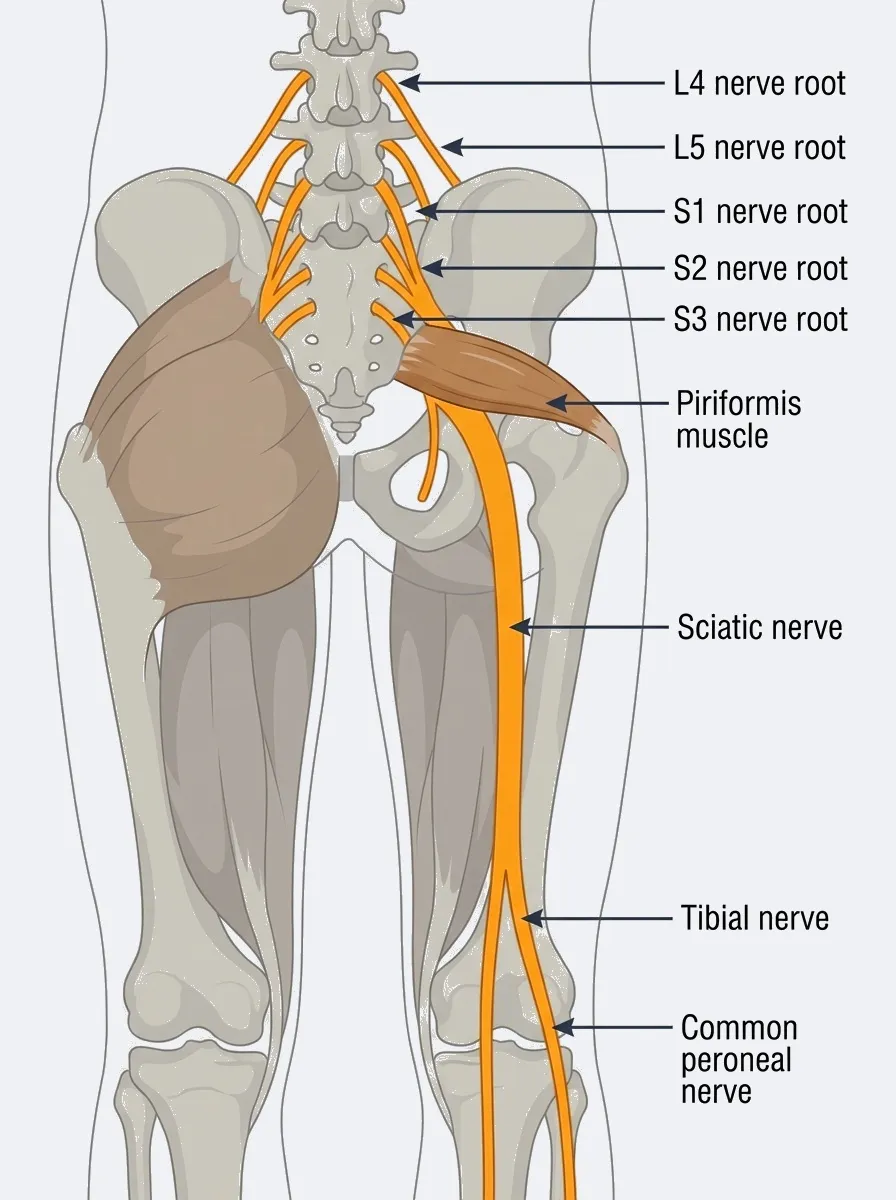
Shooting pain from the lower back into the leg is the hallmark of sciatica, but it is not always that simple. A herniated disc can produce a similar pattern when a bulging disc presses on a spinal nerve root. Piriformis syndrome can also send pain down the leg when the piriformis muscle compresses the sciatic nerve deep in the glute. The key difference is where the pain originates and what triggers it. If the pain starts in your lower back and radiates through your hip and down the back of your leg, start with the sciatica page. If you also notice deep buttock pain that flares with sitting, the piriformis page may be more relevant. Many clients have overlapping patterns, and your first visit helps sort which is primary.
Pain that worsens with sitting and eases with walking is one of the most common patterns we see. Sitting increases pressure on the lumbar discs, which is why this pattern often points toward disc-related irritation. When you stand and walk, the spine decompresses slightly and the load shifts away from the disc. If your pain also shoots into your leg when seated, look at the herniated disc page or the sciatica page. If the pain stays in your lower back without leg symptoms, the lower back pain page is a better starting point. The sitting-standing pattern is important information for your assessment and helps identify which structures are under the most load.
Deep burning pain in the glute that flares with sitting is the signature pattern of piriformis syndrome. The piriformis muscle sits deep under the gluteal tissue, and when it tightens or spasms it can compress the sciatic nerve running beneath it. This makes it easy to confuse with sciatica, since both can produce radiating pain. The difference is usually where the pain concentrates. Piriformis pain tends to center deep in the buttock and may radiate into the thigh, while sciatica typically follows a longer path from the lower back through the hip and down into the calf or foot. If your pain is mostly in the glute and gets worse when you sit on hard surfaces or cross your legs, start with the piriformis page.
That confusion is extremely common because these conditions share overlapping symptoms and many clients have more than one pattern contributing at the same time. Sciatica typically sends shooting or burning pain from the lower back down through the hip and leg. A herniated disc often creates sharp pain that spikes with bending, lifting, or sitting for long periods. Chronic lower back pain tends to show up as a stubborn ache that worsens through the day and stiffens after rest. Piriformis syndrome produces deep buttock pain that flares with sitting and can mimic sciatica. The symptom quiz above can help you narrow it down, and your first visit includes a hands-on assessment to identify which patterns are actually driving your symptoms.
Morning stiffness that takes time to work through is one of the most common patterns in chronic lower back pain. When muscular tension stays elevated overnight, the tissues tighten further during sleep and resist movement when you first get up. The loosening window is a sign that the underlying tension is significant but still responds to gentle activity. If the stiffness comes with sharp pain when you bend forward or try to stand up straight, disc irritation may also be involved. If you notice pain or stiffness radiating into your hip or glute, piriformis syndrome could be contributing. Start with the lower back pain page if morning stiffness is your dominant pattern, since that page covers the chronic muscular tension cycle in detail.
Strategically located between Brickell and Coral Gables, our clinic is just 5 minutes from Coconut Grove and a quick drive from Downtown Miami. Whether you work downtown or live in the surrounding neighborhoods, we're easy to reach.